Building Topical Authority: The SEO Strategy That Actually Works in 2026
What is Topical Authority and Why Does It Matter?
Topical authority means being recognised - by search engines, AI models, and users - as the definitive source on a specific subject. It's not about one great article. It's about comprehensive, interconnected coverage of an entire topic that demonstrates genuine depth of knowledge.
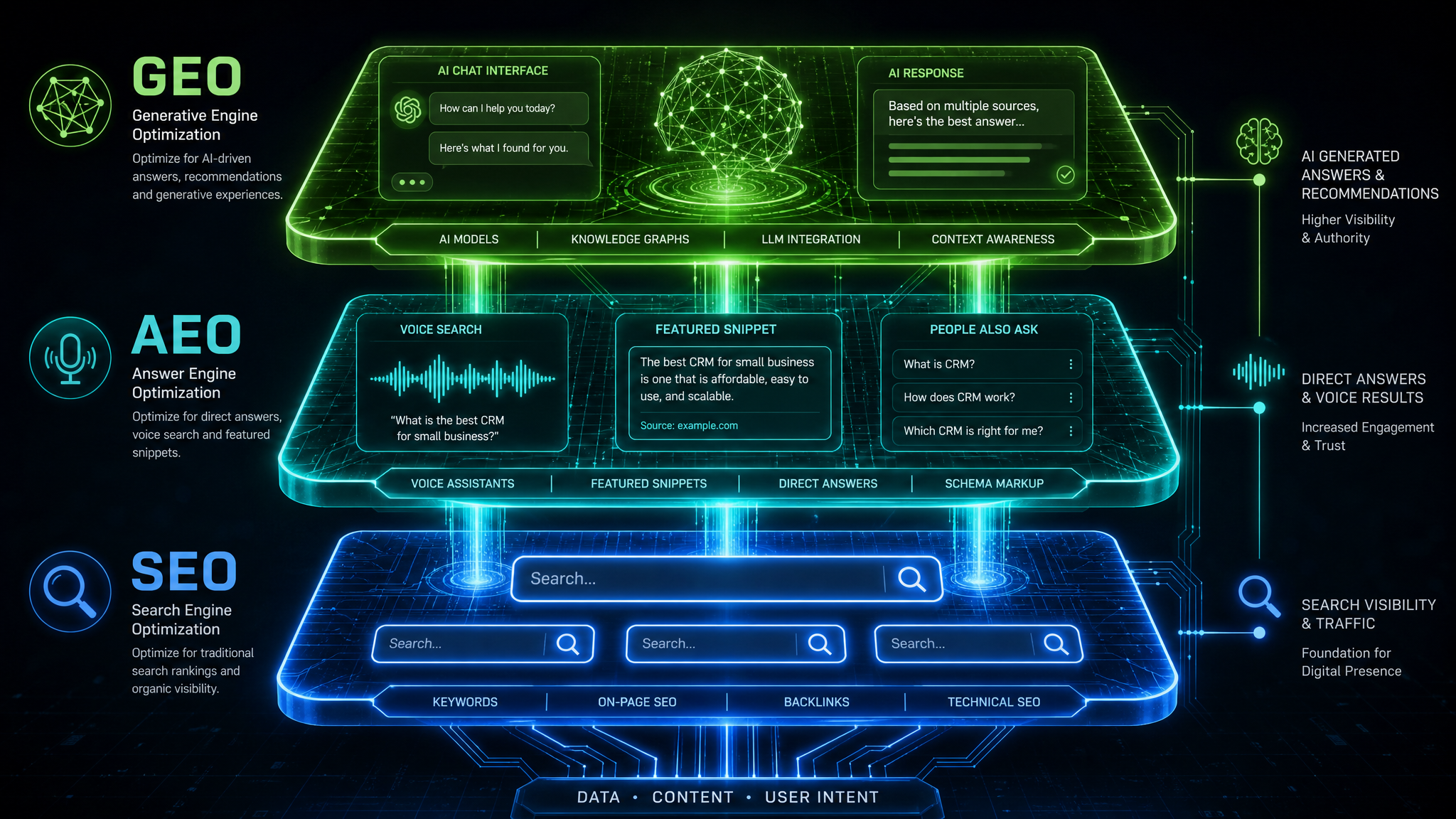
In 2026, topical authority is the single most important ranking factor you can invest in. It affects every layer of The Full Search Stack:
- SEO - Google's algorithms increasingly reward topical depth. Sites with comprehensive coverage of a subject outrank sites with scattered, thin content - even if the thin content sites have stronger backlink profiles.
- AEO - Featured snippets and People Also Ask boxes tend to pull from sites that have multiple related articles on a topic, not one-off pieces.
- GEO - AI models recognise topical authority as a signal of expertise. They're more likely to cite and recommend sources that have deep, consistent coverage of a subject.
This is why I've structured ZimNinja.net around clear topic pillars - Rank & Rent, SEO/AEO/GEO, Chameleon Overlay, and digital marketing tools. Every piece of content I publish strengthens the topical authority of the entire site.
The Pillar-Cluster Model: How Topical Authority Actually Works
The most effective way to build topical authority is through the pillar-cluster content model. Here's how it works:
Pillar Content
A pillar page is a comprehensive, authoritative guide on a broad topic. It's your anchor piece - typically 3,000-5,000+ words covering the topic from every angle. Think "The Complete Guide to Rank and Rent" or "SEO vs AEO vs GEO: The Full Search Stack Explained."
Pillar pages serve two purposes:
- They rank for broad, high-volume keywords ("rank and rent", "what is AEO")
- They act as the hub that all related cluster content links back to
Cluster Content
Cluster articles are focused, in-depth pieces on specific subtopics within the pillar's domain. Each cluster article targets a more specific, often long-tail keyword and links back to the pillar page.
For example, my Rank & Rent pillar page is supported by cluster articles like:
- "The Best Rank and Rent Niches in 2026" (subtopic: niche selection)
- "How to Find Tenants for Your Rank and Rent Site" (subtopic: tenant acquisition)
- "Rank and Rent vs Client SEO: Which Model is Better?" (subtopic: model comparison)
Each cluster article strengthens the pillar page's authority, and the pillar page distributes authority back to the clusters. The result is a self-reinforcing network of content that Google recognises as a comprehensive, authoritative resource.
How I Build Topical Authority: My Exact Process
Step 1: Define 3-5 Core Topic Pillars
Start by identifying the topics you want to own. These should be:
- Directly relevant to your expertise or business
- Broad enough to support 10-20 cluster articles
- Commercially valuable (they attract an audience that converts)
For ZimNinja, my pillars are: Rank & Rent, SEO/AEO/GEO, Chameleon Overlay, and Digital Marketing Tools. Everything I publish falls under one of these pillars.
Step 2: Create Comprehensive Pillar Content
Each pillar gets a definitive guide - the most complete resource on that topic anywhere on the internet. This is not a 500-word overview. This is a 3,000-5,000 word masterpiece that covers:
- What the topic is (definition, context)
- How it works (methodology, process)
- Why it matters (benefits, use cases)
- Common mistakes (what to avoid)
- Advanced strategies (expert-level insights)
- FAQs (structured for AEO)
Step 3: Plan and Publish Cluster Content
For each pillar, I plan 10-20 cluster articles covering specific subtopics. I schedule these to publish regularly - aiming for 3-5 new articles per week across all pillars.
Every cluster article:
- Targets a specific long-tail keyword
- Links back to the parent pillar page at least once
- Links to 2-3 other cluster articles in the same topic
- Is written from first-person experience where possible
- Includes FAQ sections with schema markup
Step 4: Internal Linking Strategy
Internal linking is the nervous system of topical authority. Every piece of content should be connected to related content through contextual links.
My rules for internal linking:
- Every cluster article links back to its pillar page
- Pillar pages link out to all their cluster articles
- Related cluster articles cross-link to each other
- New articles reference and link to existing content
- Anchor text is descriptive and keyword-relevant (not "click here")
Step 5: Demonstrate E-E-A-T in Every Piece
Google's E-E-A-T framework (Experience, Expertise, Authoritativeness, Trust) is crucial for topical authority. Every piece of content I publish demonstrates:
- Experience - First-person accounts from real projects ("In my 10+ years of rank and rent...")
- Expertise - Deep technical knowledge and specific actionable advice
- Authoritativeness - Consistent author branding with bio, credentials, and cross-references
- Trust - Transparent, honest assessments including what doesn't work
Step 6: Update and Maintain
Topical authority isn't set-and-forget. I review and update pillar content quarterly, add new cluster articles regularly, refresh data and examples, and respond to changes in the industry.
A neglected content hub loses authority over time. An actively maintained one compounds it.
How Long Does It Take?
Topical authority takes time. For a new site starting from scratch:
- Months 1-3: Publish pillar content and first round of clusters. Limited organic traffic.
- Months 3-6: Google begins recognising topical depth. Long-tail rankings emerge.
- Months 6-12: Pillar pages start ranking for competitive terms. Traffic grows significantly.
- Months 12+: Compounding authority. New content ranks faster. AI models begin citing you.
This is the long game. But once you've built genuine topical authority, it's incredibly durable. You become the default source - and that's a moat that's nearly impossible for competitors to replicate quickly.
I've built topical authority in multiple niches over 19 years. ZimNinja is my latest and most ambitious example. Follow along as I document the process in real time.

Craig Riley
Digital marketing specialist with 19+ years of experience in Rank & Rent, SEO, AEO, and GEO.