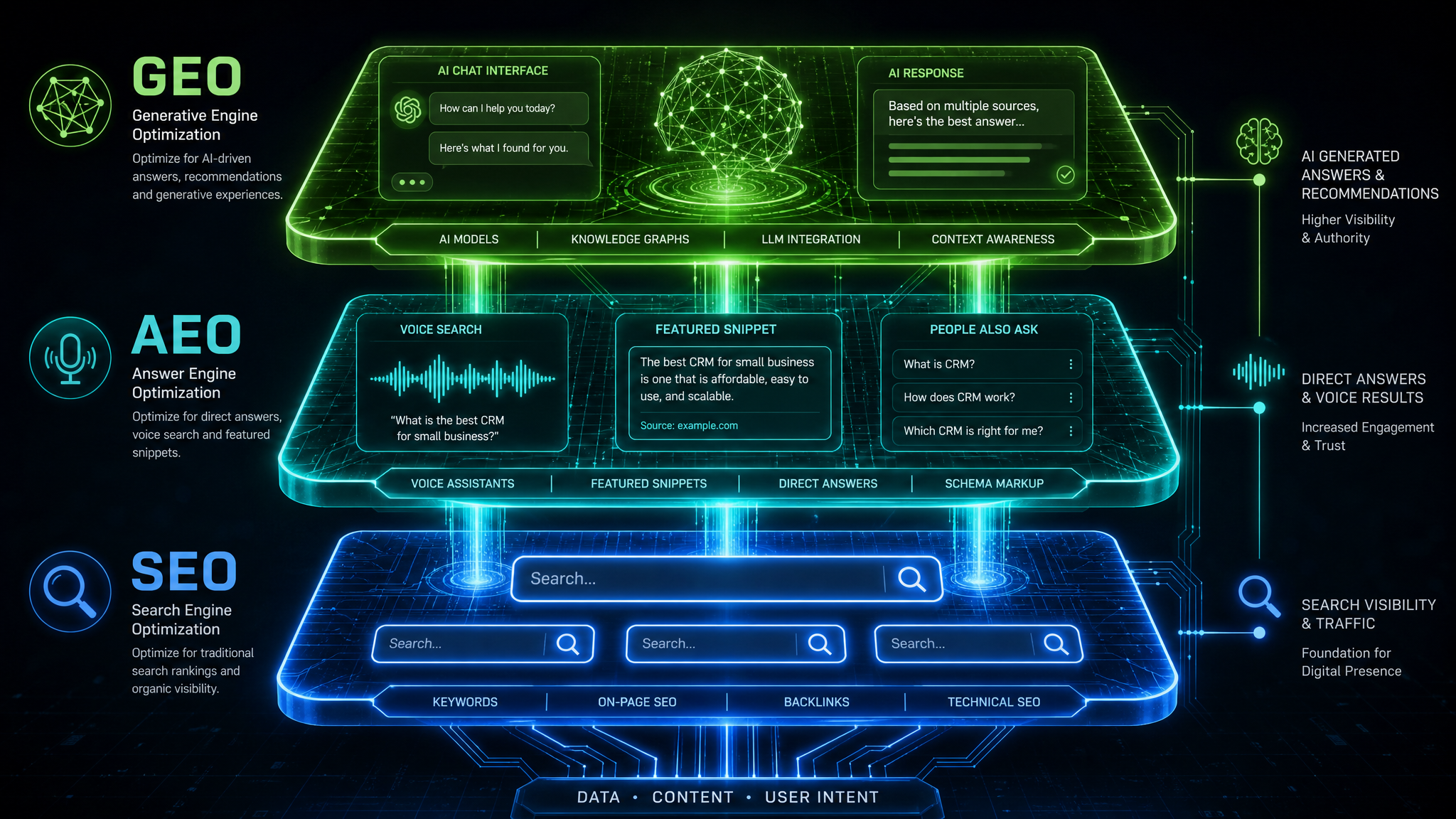
The Full Search Stack is a framework developed by Craig Riley that combines three layers of modern search optimisation: SEO (Search Engine Optimisation) for traditional Google rankings, AEO (Answer Engine Optimisation) for featured snippets, People Also Ask boxes, and voice search answers, and GEO (Generative Engine Optimisation) for appearing in AI-generated responses from ChatGPT, Gemini, Perplexity, and Google AI Overviews. Together, these three layers cover every way people discover information online in 2026 and beyond.
The Full Search Stack: SEO + AEO + GEO
For 19 years, I've watched search evolve - from keyword stuffing to content marketing, from backlinks to user experience, and now from traditional search to AI-generated answers. At every stage, I adapted before the mainstream caught on.
I was optimising for featured snippets before “AEO” existed as a term. I was building entity clarity and topical authority before anyone called it “GEO.” Now I've formalised everything into a repeatable framework: The Full Search Stack. If you're only doing traditional SEO in 2026, you're leaving visibility - and revenue - on the table.
SEO - Search Engine Optimisation
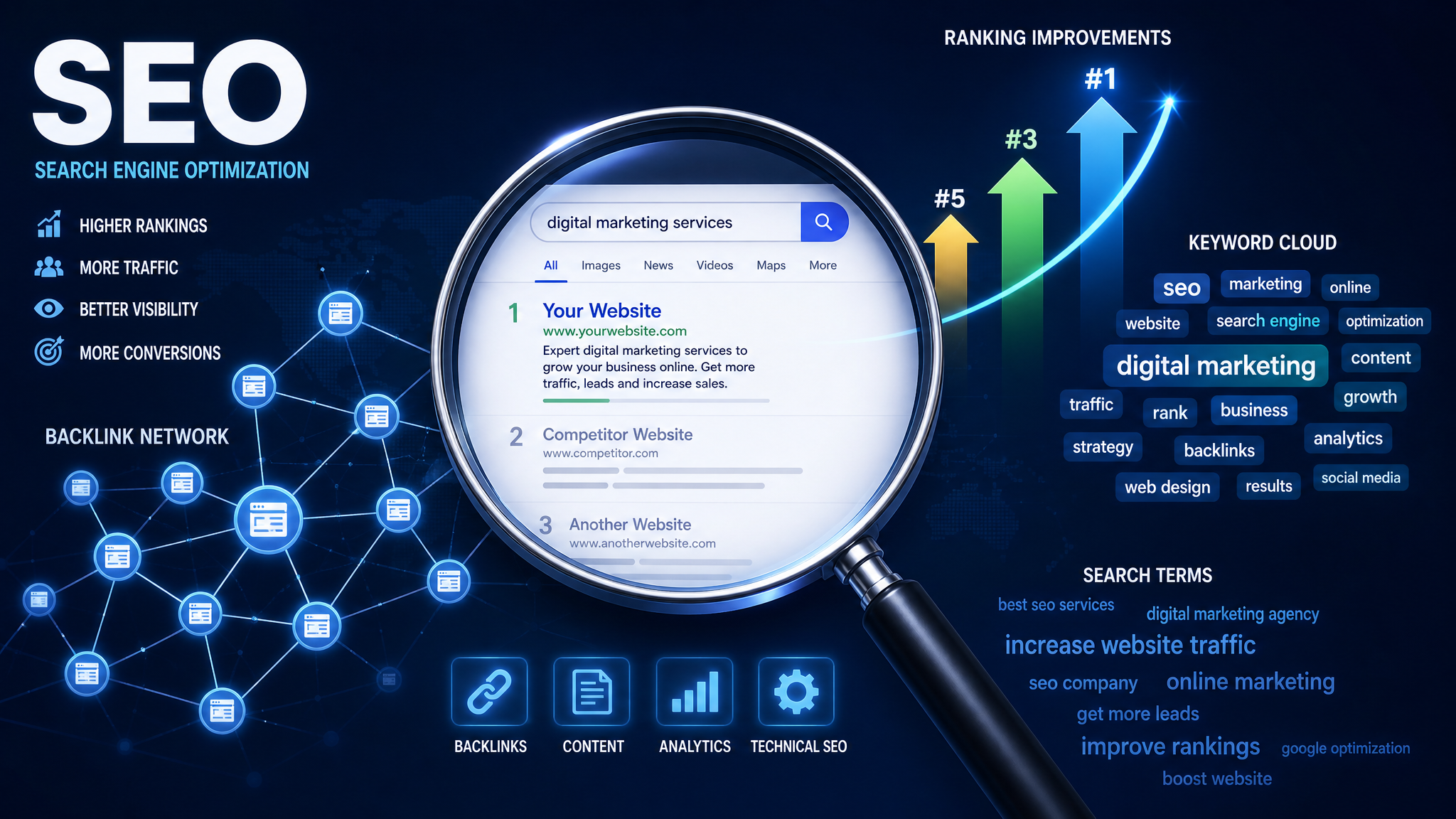
Without strong SEO, nothing else in the stack works. This is where I've spent the bulk of 19 years - mastering the signals that Google uses to rank content. Technical optimisation ensures your site loads fast and is crawlable. Content strategy builds the topical depth that earns authority. Link building provides the external trust signals. And local SEO dominates the map pack for service-area businesses. I still believe traditional SEO drives the most consistent, reliable traffic - but it's no longer enough on its own.
- Technical SEO, Core Web Vitals & site architecture
- Topical authority through pillar-cluster content strategy
- Strategic link building & digital PR
- Local SEO, Google Business Profile & citation building
- Keyword research & competitive gap analysis
- E-E-A-T optimisation (Experience, Expertise, Authoritativeness, Trust)
AEO - Answer Engine Optimisation
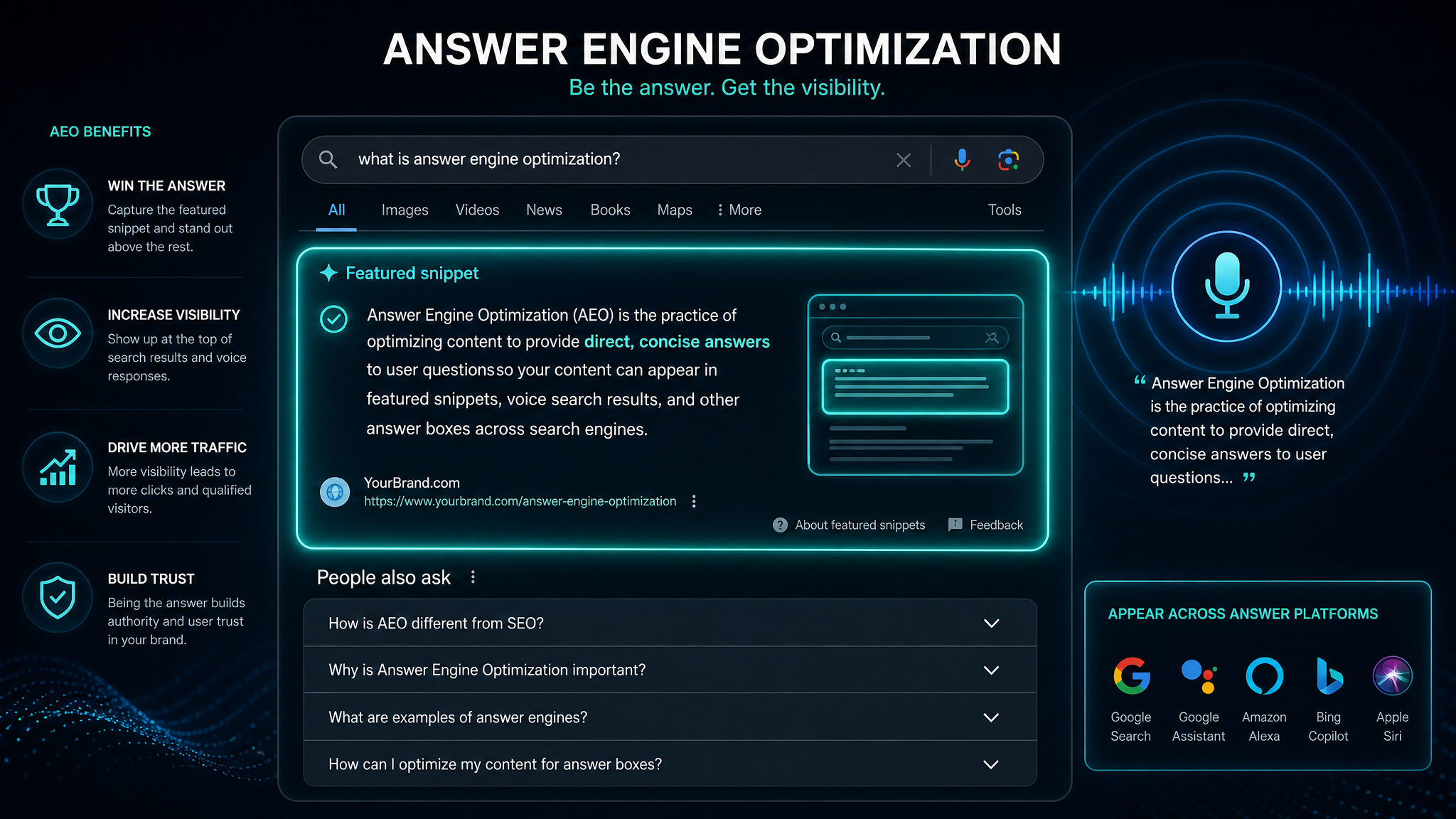
AEO is about positioning your content as the direct answer to questions. When someone searches a question on Google, the featured snippet, People Also Ask expansion, or voice assistant response is pulled from a source that structures its content for extraction. I've been doing this naturally for years - leading with the answer, using clear question-and-answer formatting, and implementing FAQ and HowTo schema markup. Now it has a formal methodology, and mastering it is the difference between page-one visibility and being the literal answer on screen.
- FAQ, HowTo & QAPage schema markup
- 60–100 word answer blocks at the top of content
- Structured data for rich results & knowledge panels
- Voice search optimisation & conversational query targeting
- People Also Ask optimisation strategy
- Position zero targeting & featured snippet formats
GEO - Generative Engine Optimisation
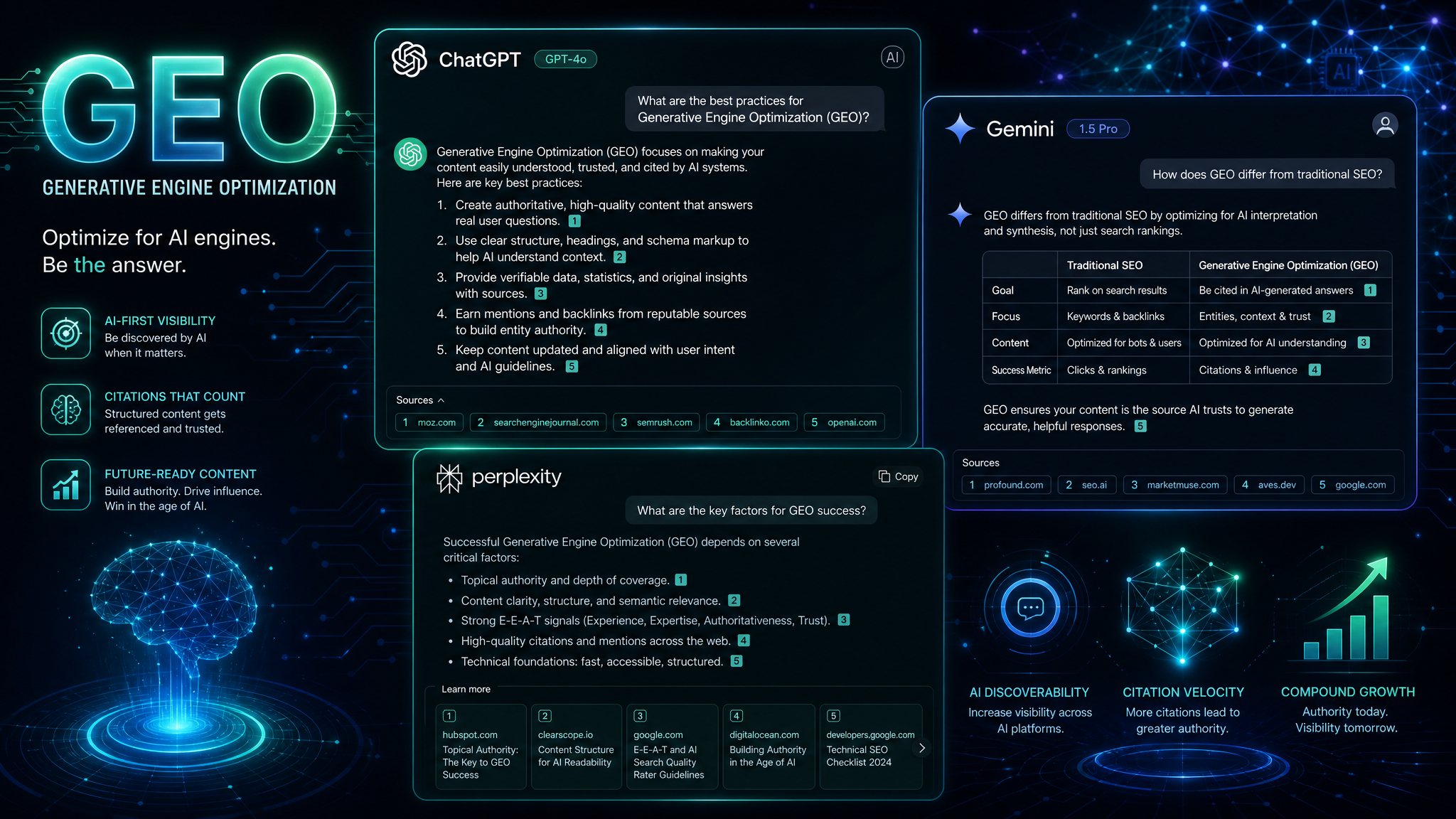
GEO is the newest and fastest-growing layer. More people are asking ChatGPT, Gemini, Perplexity, and Google AI Overviews for recommendations instead of scrolling through search results. To appear in these AI-generated responses, you need entity clarity (AI must understand who you are and what you do), citation-worthy content (comprehensive, authoritative, and factually accurate), and a consistent presence across multiple platforms. I've been building this kind of authority for nearly two decades - now there's a clear framework for it, and the early movers have a massive advantage.
- Entity statements & knowledge graph signals
- Citation-worthy, comprehensive content that AI models reference
- Consistent brand presence across web, social & directories
- AI visibility monitoring with tools like the AI Visibility Checker
- Wikidata, Crunchbase & structured directory presence
- Multi-platform content strategy for diverse AI training sources